

Hello, this is Izumitani from Ehime Film Commission.
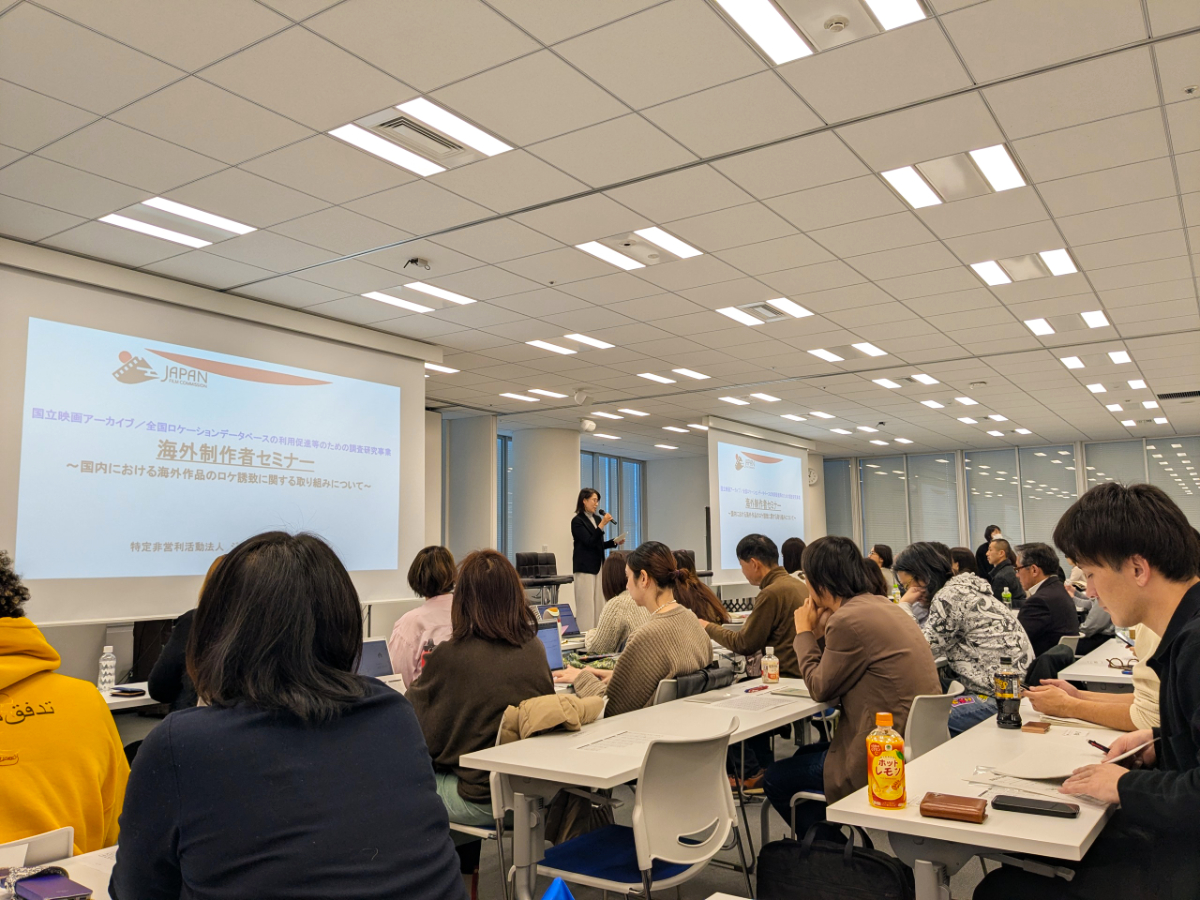
The day after the National Location Fair — which drew a record 343 film and media professionals — we attended the “Seminar on International Film Production in Japan.”
The session opened with a preview of Rental Family, a film starring Brendan Fraser set for release on February 27, which was shot in Tokyo and other Japanese locations. The broader message was clear: there is a growing number of international productions set in Japan, and the Japanese government is actively working to attract more.
In Ehime, we do receive inquiries from international filmmakers — many are drawn to the cultural richness of the Shikoku Pilgrimage and the dramatic natural scenery of Shikoku Karst. But translating interest into an actual shoot is rarely straightforward, and international productions in rural Japan remain rare.
Ehime has come close, though. At one point, we were in discussions with the team behind a John Woo film. We found a promising location, but logistically moving a large international crew to that site proved unworkable and the project didn’t move forward. More recently, a film starring Lee Byung-hun was considering Ehime as a location, but the specific conditions of that project weren’t a match either.
Still, international productions in Japan are clearly growing, and the question isn’t whether they’ll come to regional Japan — it’s when. The seminar explored what kind of preparation and mindset is required to host them well.
One of the most memorable points from the session was how often the same English words carry completely different mental images for different people. Georgina Pope from Toho Tombo — who has facilitated many international productions in Japan — offered vivid examples: a crew asking for a “supermarket” might actually be picturing a small greengrocer. A request for a “road” might mean an unpaved path or an earthen embankment. And when foreign filmmakers ask for something “typically Japanese,” they may be imagining a retro Showa-era townscape rather than traditional Japanese aesthetics.
Assumptions become fixed ideas. Fixed ideas lead to misaligned expectations. And misaligned expectations mean no one ends up satisfied — and no location gets used. The only solution, as Georgina put it, is “lots of communication and lots of photos.”
Religion is another dimension that regional productions often aren’t prepared for. Some crew members observe prayer times during the workday and need a designated quiet space at the hotel. Dietary restrictions based on religious practice or personal choice — halal, vegetarian, vegan, gluten-free — vary enormously from person to person, and there are no universal rules for how strictly each individual follows them. Catering matters too: Western crew members often expect warm, freshly prepared meals rather than the pre-packaged bentō boxes that are standard on Japanese sets.
None of this is insurmountable — but it does require flexibility, curiosity, and a genuine desire to understand.
We’re still waiting for the right international production to come to Ehime. But when it does, we’ll be ready.